
Lee Jae-myung’s vision for artificial intelligence stands apart from the paths currently taken by global powers. While countries like the United States and China are racing to dominate AI through competition, scale, and in many cases military integration, Lee has framed Korea’s approach in a different way.
His goal is not simply to win the AI race, but to shape how that race is run. He has repeatedly emphasized that Korea should rise as an AI power not just for economic strength, but for ethical leadership.
At present, Korea is ranked as the third leading AI-capable nation in the world, supported by its strong semiconductor industry, advanced digital infrastructure, and highly educated workforce. Lee’s plan builds on this foundation. He sees AI as essential for sustaining long-term economic growth in a country facing demographic challenges such as low birth rates and an aging population. But unlike other national strategies that prioritize dominance, his approach highlights responsibility. He has made clear that AI should serve humanity, not undermine it.
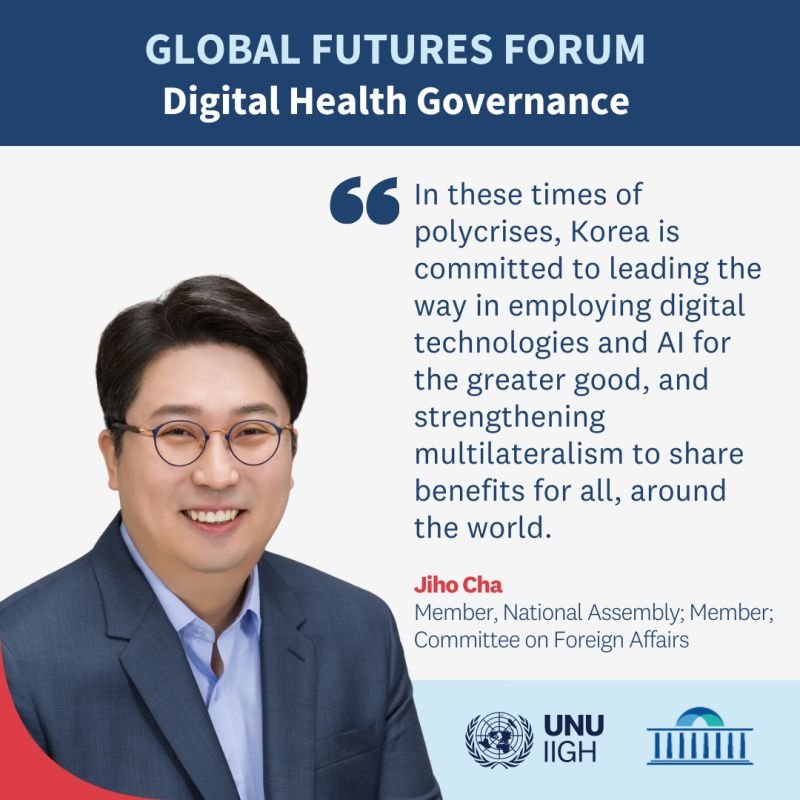
A key figure Lee has appointed to turn this vision into reality is Cha Jiho, a National Assembly member from the Democratic Party. Before entering politics, Cha worked as a physician with Doctors Without Borders, where he witnessed firsthand the devastating shortages of medical personnel in conflict zones and developing countries. That experience shaped his belief in what AI can do beyond borders.
For Cha, AI is not an abstract technology. It is a practical tool that can save lives. In regions where there may be only a handful of doctors for thousands of patients, AI systems could assist in diagnosing diseases, recommending treatments, and even guiding surgical procedures. In such environments, even a small number of trained professionals, supported by advanced AI, could dramatically improve outcomes. This is not about replacing human doctors, but extending their reach.
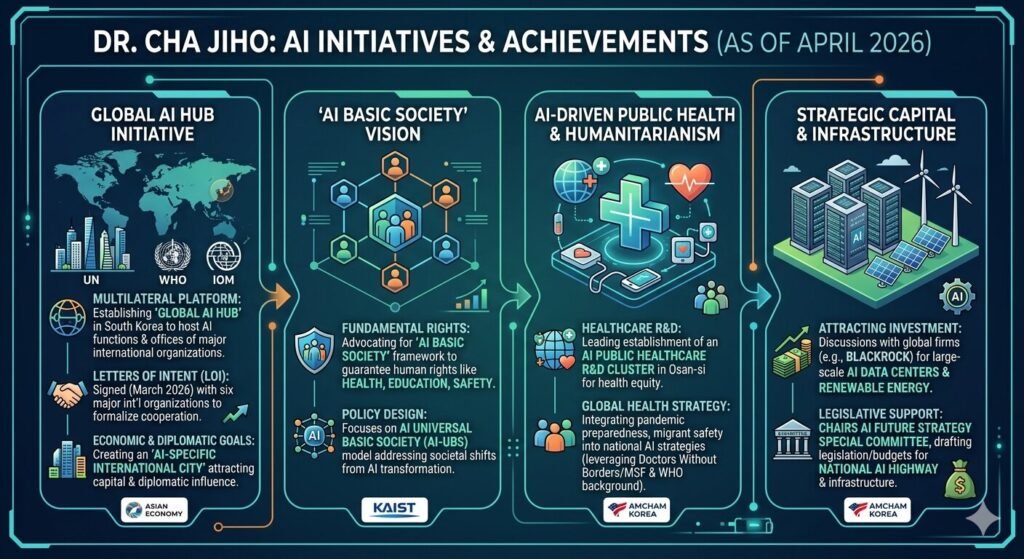
Building on this perspective, Cha has advanced a broader framework known as the AI Universal Basic Society, or AI-UBS. This model moves beyond the idea of simple income support and instead treats AI as a form of essential public infrastructure. It is designed to respond to what he describes as a growing “polycrisis,” where job displacement, widening inequality, and demographic decline are happening at the same time. Rather than focusing only on cash transfers, as in traditional universal basic income models, AI-UBS centers on guaranteeing access to AI itself. The aim is to ensure that every citizen can use high-level AI services in healthcare, education, and public safety, so that no one is left behind in an increasingly digital world.
At its core, the model also reflects a deeper philosophical shift. Cha has described it as a new starting point for thinking about human dignity. If AI can reduce the pressure to compete for survival in a shrinking job market, then society can begin to value fulfillment, learning, and social connection in new ways. The goal is not just efficiency, but a more balanced and humane social structure.
To make this vision concrete, the plan is organized into four closely connected pillars. The first is the creation of a global AI hub, positioning Korea as a kind of diplomatic center for AI governance. This includes hosting specialized offices connected to international bodies such as the United Nations, the World Health Organization, and the International Organization for Migration, with the goal of setting global standards for humanitarian uses of AI. In March 2026, letters of intent were reportedly signed with several major international organizations to begin formalizing this role.
The second pillar focuses on human rights. It seeks to establish access to AI not as a luxury, but as a basic right. Under this framework, AI would directly support essential services such as healthcare access, personalized education, and public safety systems. The broader aim is to ensure that data and algorithms serve human development, rather than being driven only by corporate interests.
The third pillar centers on public health, an area shaped strongly by Cha’s medical background. Plans include the development of an AI-driven public healthcare research cluster in Osan, where new tools can be created for pandemic response, disease tracking, and the protection of vulnerable populations, including migrants. This reflects lessons learned from global health crises and fieldwork in underserved regions.
The fourth pillar addresses the practical question of funding and infrastructure. Rather than relying solely on public budgets, the strategy looks to attract large-scale private investment to build what has been described as an “AI national highway.” This includes data centers, computing capacity, and renewable energy systems needed to sustain them. Global investment firms are expected to play a role in supporting this expansion.
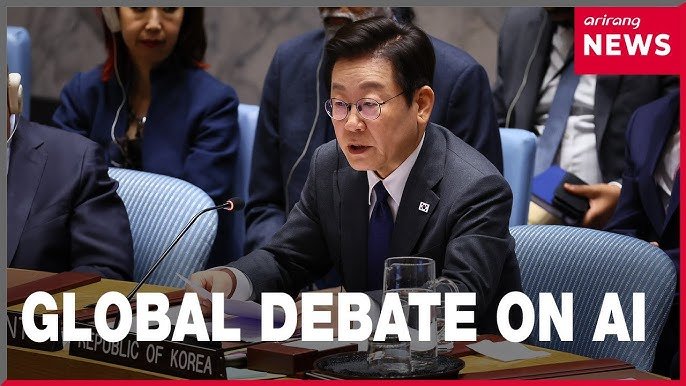
This humanitarian focus has also influenced Korea’s international positioning. Organizations within the United Nations have shown growing interest in the idea of establishing a global AI center in Korea. The proposed UN AI Center would serve as a hub for developing standards, sharing technology, and ensuring that AI is used in ways that benefit humanity as a whole. Cha has traveled internationally to advocate for this vision, emphasizing cooperation over competition and ethics over exploitation.
This stands in contrast to the current trajectory in other parts of the world. In the United States and China, AI development is closely tied to national security and defense strategies. Autonomous systems, surveillance technologies, and advanced targeting capabilities are all part of the conversation. While these developments are often framed as necessary for deterrence, they raise serious ethical concerns about how AI could be used in conflict, especially when civilian lives are at risk.
Korea’s approach, as outlined by Lee, draws a clearer line. AI, in this vision, is not a tool for expanding warfare, but for strengthening defense in a limited and protective sense while prioritizing civilian and humanitarian applications. The emphasis is on preventing harm, not projecting power.
Looking ahead, the success of this model will depend on whether other nations are willing to engage with it. There is reason to believe that global attitudes toward AI governance are still evolving. In the United States, political leadership changes often bring shifts in technology policy, and future administrations may be more open to international collaboration on ethical standards. As for China, its rapid economic development and the changing expectations of its younger generations could gradually influence how it approaches global cooperation, including in technology.
Lee Jae-myung’s proposal, then, is not just a national strategy. It is an attempt to shape the global conversation about AI. It asks a simple but difficult question: what is the purpose of this technology? If the answer remains tied only to power and competition, the risks will continue to grow. But if countries begin to align around shared human goals, AI could become one of the most powerful tools for improving life across the world.
Whether this vision takes hold is uncertain. But it offers a clear alternative, one that places humanity, rather than dominance, at the center of the AI era.