
I recently read a new book called A CEO for All Seasons, written by senior partners at McKinsey & Company, one of the world’s leading consulting firms. The authors argue that the CEO role has become both harder and more important at a time when many people distrust leadership.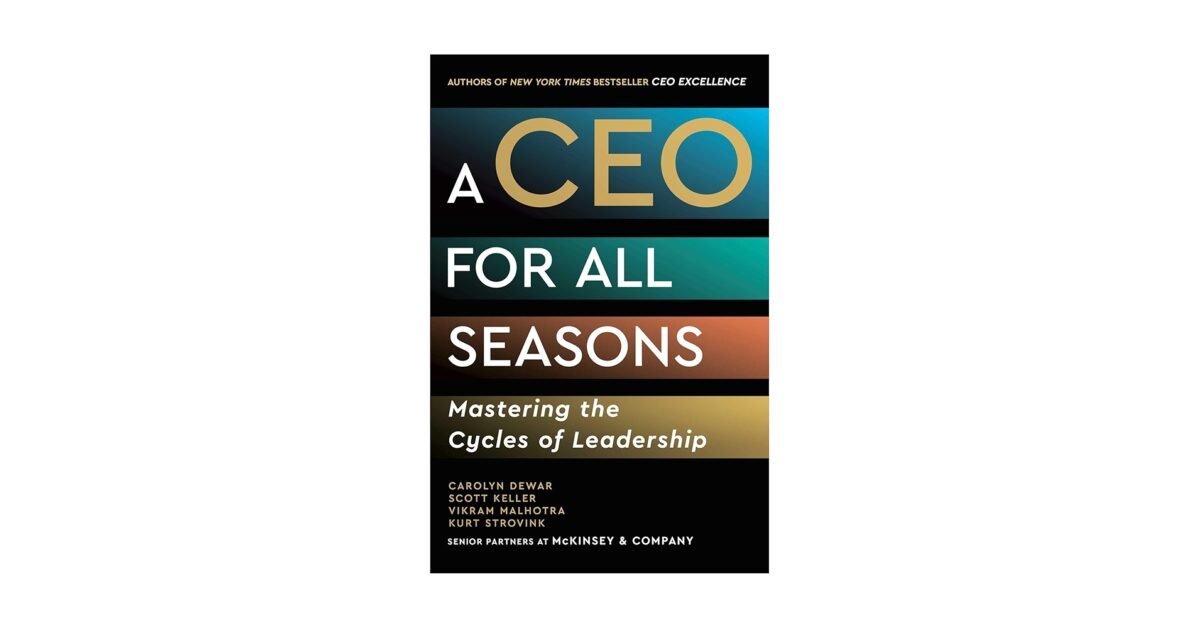
Their data is stark: 30% of CEOs fail within three years, and failed transitions in the S&P 500 destroy roughly $1 trillion in value each year. They also find that top-quintile CEOs generate thirty times more economic profit than the next three quintiles combined, showing just how unevenly leadership talent is distributed.
In this cutthroat environment, the researchers used sophisticated metrics to isolate the world’s top 200 CEOs, studying and surveying them to discover what made them succeed and to share that wisdom. Through this work, they learned that every successful leader shared one defining trait: a deep curiosity and learning mindset. Nearly every CEO they interviewed mentioned it.
As an educator, I always tell my students to stay curious, about how things work, why the world turns, and what makes it turn. It echoes what Merlin once taught young Arthur: “Learn why the world wags and what wags it.”
I have watched Lee Jae-myung closely, from his years as mayor of Seongnam (I lived in this city for two of those years), to his time as governor of Gyeonggi Province, and now through his first six months as President of Korea. Among his many strengths, the one that stands above the rest is his inexhaustible curiosity. He is always reading, studying, and questioning experts. No matter the topic, be it economics, technology, science, or the humanities, he seems to have a solid grasp, and in every town-hall meeting he has held across the country, he engages deeply. When he doesn’t know something, he listens, asks the panel expert, and learns.
This attitude—this relentless curiosity and learning mindset—is what makes him such an extraordinary president, echoing the qualities of the 200 high-performing CEOs described in the book. And there is one finding Koreans may especially appreciate: none of those 200 leaders experienced a “sophomore slump.” They grew steadily better throughout their tenure.
If that pattern holds true, the next five years may well become some of Korea’s brightest.