

Three months ago, before President Lee Jae-myung’s meeting with Donald Trump at the White House, Trump posted on social media accusing the Korean government of carrying out a purge (of Christians) and trying to start a revolution. It was an act of utter, flagrant disrespect that upended the diplomatic decorum, protocol, norms…you name it.
As soon as I saw Trump’s message based on a fake news, I shook my head, thinking this meeting would turn into another farce like Trump’s with Ukraine’s President Zelensky or South Africa’s President Cyril Ramaphosa, where Trump hurled accusations based on fake news and the whole thing went off the rails. In his meeting with Ramaphosa, Trump even showed a video and accused the South African government of murdering white farmers by the thousands, saying there was “white genocide” in the country. Ramaphosa, completely flabbergasted, couldn’t very well say, “You’re a moron and racist,” so he answered diplomatically, even as his voice betrayed anger: South Africa is dealing with crime, people are being killed, and most of them are Black.
Those disasters flashed through my mind when I saw Trump’s asinine message. President Lee, ever the shrewd and capable politician, remained composed throughout the meeting, which Trump deliberately delayed for nearly an hour, another slight to the president of South Korea and a mockery of diplomatic decorum. He calmly explained to Trump that a special prosecution, formed by the National Assembly, was handling the Yoon case (the former president of Korea, Yoon Suk-yeol, is on trial for insurrection), not his administration, and that court-issued search and seizure warrants had authorized raids on many locations, including churches that might have colluded with Yoon. To the relief of every Korean, Trump admitted he must have misunderstood, and from then on the meeting, which lasted nearly three hours, went smoothly.
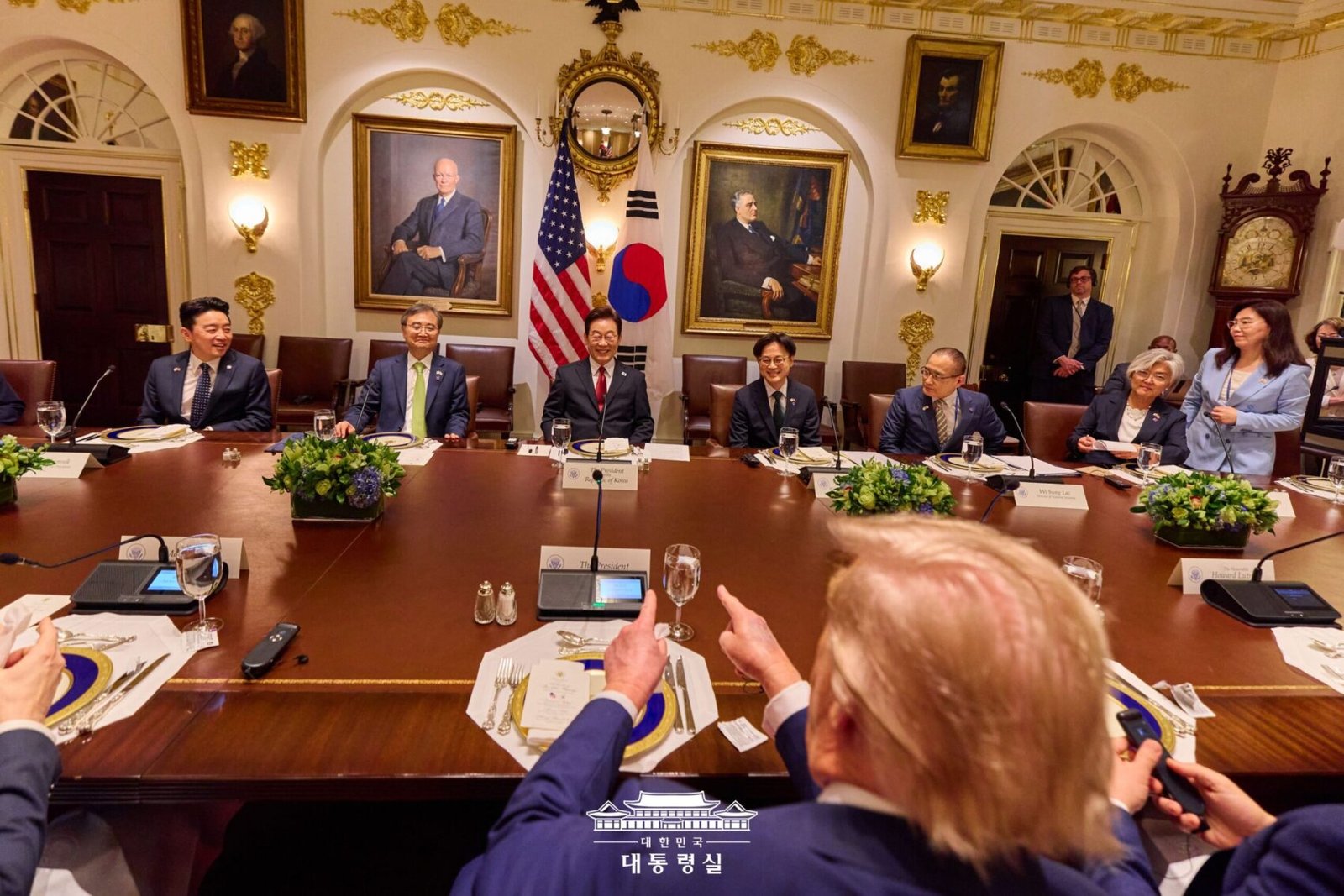
During those three hours, President Lee had to butter him up, calling him “peacemaker,” “negotiator,” and “competent.” You know he didn’t want to, knowing what a terrible and incompetent person Trump is, but he did it for the Korean people because they depend on him. The meeting was incredibly important for Korea’s future: tariffs and import and export dealings, everything a trade dependent country like Korea lives on. Simply, the United States is the strongest country in the world and the number one importer of Korean products.
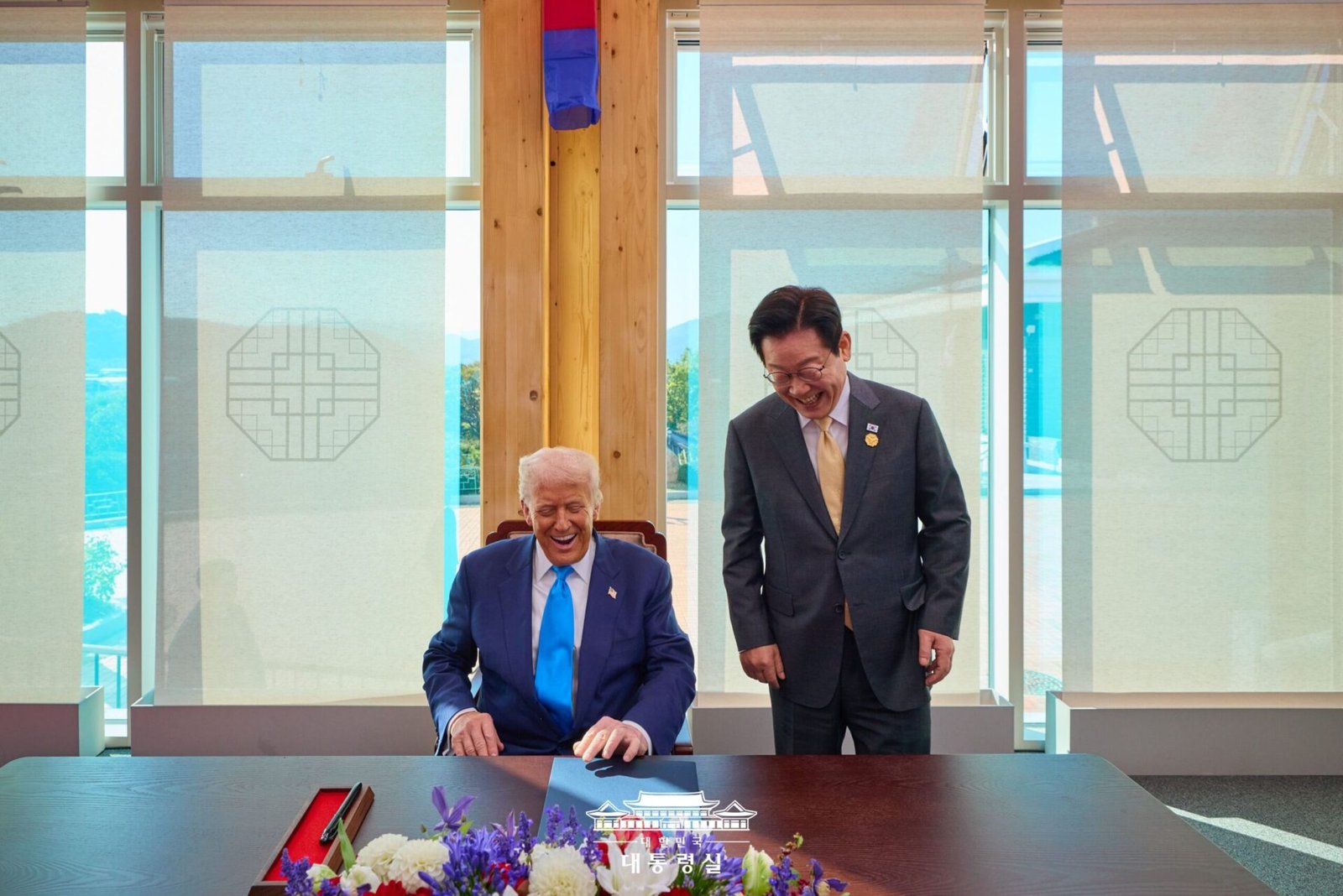
Then, this week, President Lee and Trump met once again at the APEC Leaders’ Meeting in Gyeongju, Korea. This time, the proceedings unfolded smoothly from start to finish, free of any pre-meeting stupidity from Trump. The summit also produced tangible outcomes for both South Korea and the United States. Two countries reached a series of sweeping agreements in trade investment and defense policies. Though formally described as a framework rather than a treaty, the scope and symbolism of their accord marked one of the most consequential realignments between the two allies in recent years.
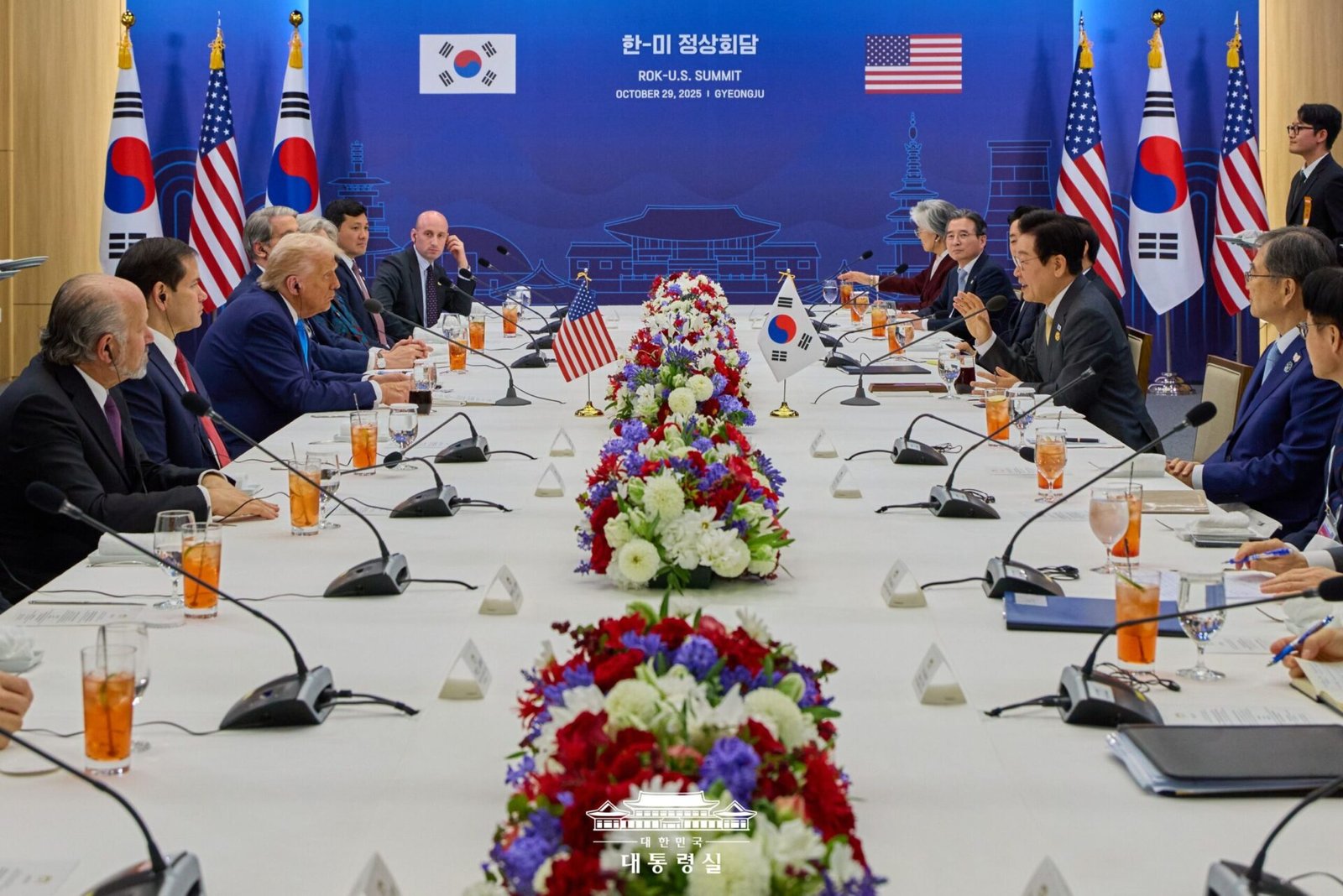
The centerpiece was economic. Korea committed to investing roughly 350 billion U.S. dollars in the American economy over the coming decade. About 200 billion of that sum would be delivered as direct capital investment, which will be spread in yearly tranches of no more than 20 billion. Another 150 billion would flow into U.S. shipbuilding, an industry Trump has repeatedly promised to revive.
In exchange, the United States agreed to ease tariffs on several of Korea’s key exports. Automotive duties would be reduced to about 15 percent, while additional relief would be extended to pharmaceuticals, timber, aircraft components, and certain raw materials. The pact, therefore, served both leaders’ domestic agendas: it allowed President Lee to demonstrate Korea’s expanding economic footprint abroad, and gave Trump a major infusion of foreign investment paired with visible industrial benefits at home.
No less prominent was the defense dimension. President Lee requested permission to develop nuclear-powered, though not nuclear-armed, submarines. The following day, Trump publicly announced that the United States would allow Korea to proceed with the development of such vessels. The statement signaled a significant shift in America’s long-standing caution over sharing sensitive propulsion technology. President Lee Jae-myung also requested U.S. cooperation to secure the specialized fuel such submarines require and to advance talks on fuel reprocessing and uranium enrichment under international safeguards. Both leaders cast the move as a necessary evolution of deterrence amid North Korea’s advancing weapons programs and China’s maritime expansion.
The successful summit once again highlighted President Lee Jae-myung’s deft diplomatic touch. Unlike Japan, he refused to simply yield to American demands, a stance that resulted in a significantly favorable outcome for Korea. In an age of uncertainty, Korea is truly fortunate to have a leader as capable, pragmatic, and resolute as President Lee Jae-myung.