

The Bronze Age on the Korean Peninsula
There is no complete agreement among scholars regarding when the Bronze Age began on the Korean Peninsula. Some studies trace its origins back to the early second millennium BCE, and in particular, North Korean scholarship tends to view the formation of Bronze Age culture as beginning relatively early. In contrast, South Korean scholars generally regard around the tenth century BCE as the period when Bronze Age culture became fully developed. This difference does not arise simply from the question of when bronze artifacts first appear. Rather, it depends on whether scholars base their judgment solely on the emergence of bronze objects or whether they consider a broader range of cultural indicators, such as the spread of Mumun pottery, the strengthening of agriculture, changes in burial practices, and the development of settlement structures. For this reason, the Bronze Age on the Korean Peninsula is best understood not as beginning in a single fixed year, but as a gradual process of transformation.
From the Late Neolithic period onward, traces of agriculture gradually began to appear in various parts of the peninsula. Evidence of the cultivation of grains such as millet and foxtail millet has been identified at certain archaeological sites, along with stone tools associated with farming. Nevertheless, the primary means of subsistence at this time still relied heavily on hunting, gathering, and fishing. Rivers and coastal areas remained important centers of daily life, and communities continued to adapt to and depend upon the natural environment. Agriculture was still largely supplementary and had not yet fundamentally altered the structure of society.
After approximately 1500 BCE, with the spread of Mumun pottery culture, society gradually entered a new phase. Mumun pottery, characterized by its plain surface and practical design, differs clearly from the earlier comb-pattern pottery. This change is interpreted not merely as a shift in aesthetic preference, but as an indicator that the center of daily life was also changing. Communities increasingly established settlements on low hills and expanded settled agriculture. The continued cultivation of fixed plots of land required cooperative labor and organized effort, which in turn encouraged the differentiation of roles within the community and the emergence of authority.
mumun pottery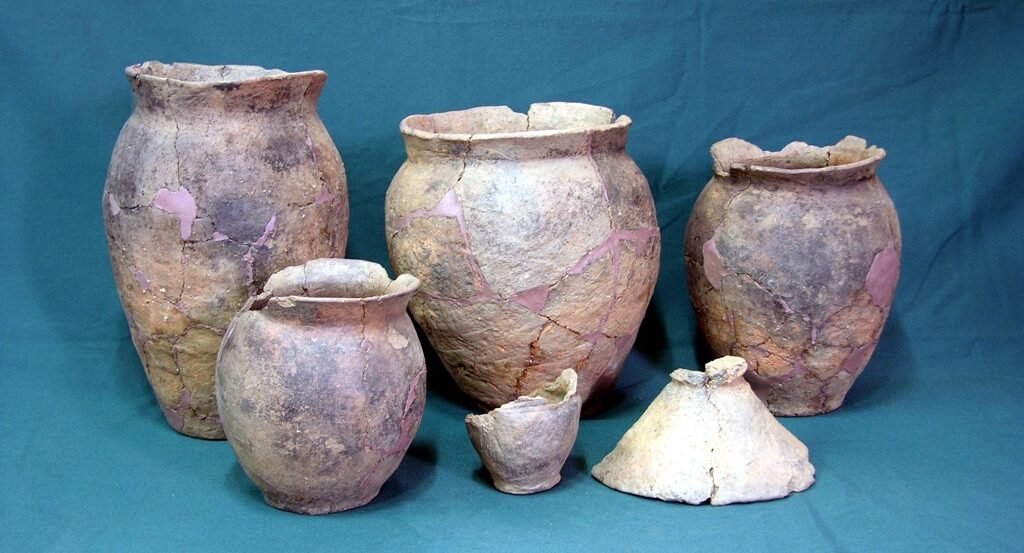
During this period, agriculture increasingly became the foundation of the economy. The use of farming tools such as stone hoes and stone sickles expanded, and evidence of grain storage facilities has been discovered. Increased production made it possible to accumulate surplus. This surplus enabled exchange and redistribution and contributed to the formation of new social relationships. The presence of individuals responsible for managing surplus and representing the community became more evident, laying important foundations for later social structures.
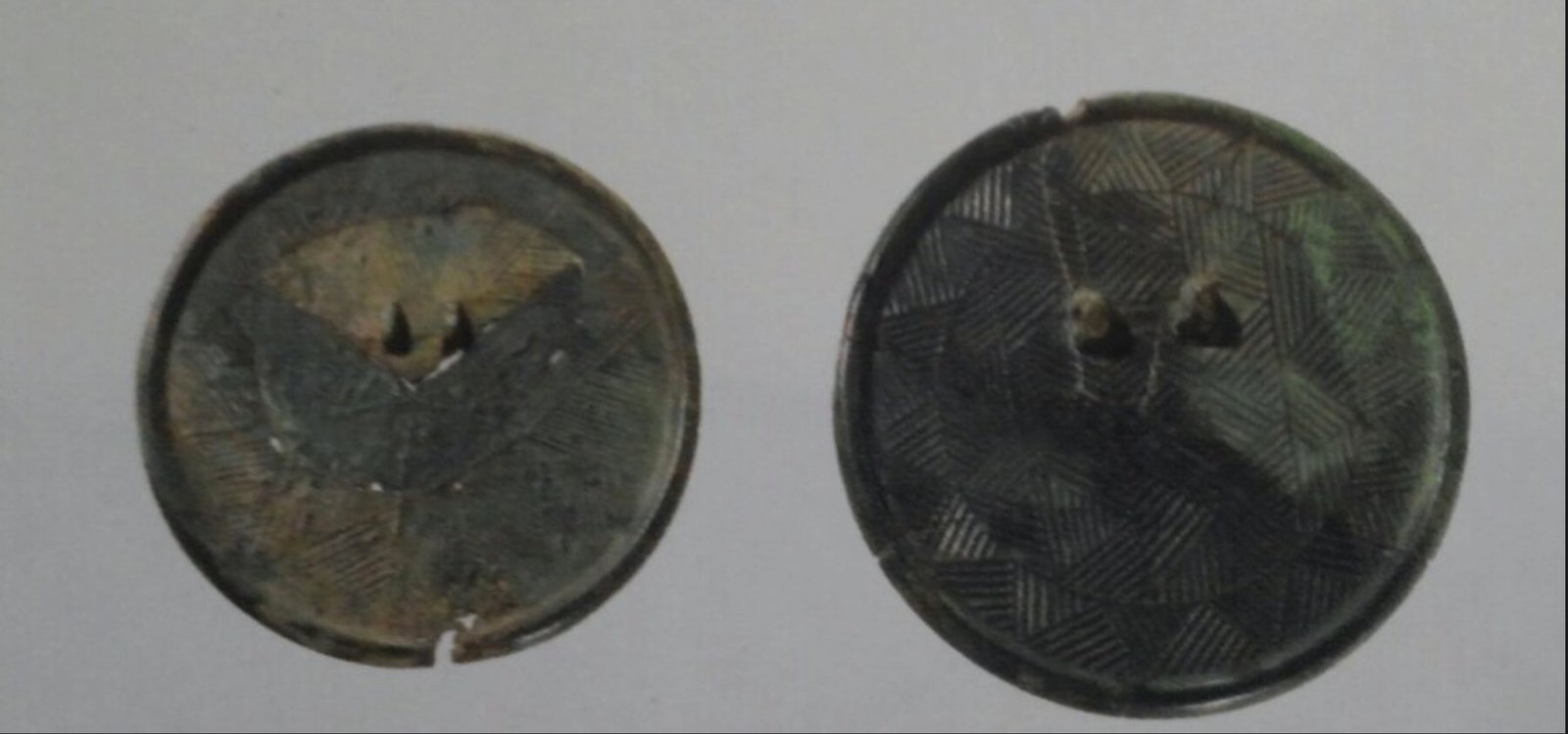
Representative artifacts of Bronze Age culture include mandolin-shaped bronze daggers, bronze mirrors, bronze ornaments, and dolmens. In particular, the mandolin-shaped bronze dagger, with its broad blade and relatively narrow handle, has become a symbolic artifact of Bronze Age culture on the peninsula. These artifacts are found not only throughout the Korean Peninsula but also in regions such as Liaodong and Jilin in Manchuria. Their distribution demonstrates that the cultural sphere of the time extended beyond present-day national borders and suggests that the peninsula and Manchuria formed a closely connected cultural region.
bronze mirror
Dolmens provide important clues for understanding the character of Bronze Age society. These large stone tombs, constructed by transporting and assembling massive stones, required considerable labor and organization. Their existence indicates the presence of structured authority and leadership within communities. Differences in grave goods also reflect social hierarchy. Some burials contain bronze objects or ornaments, suggesting that certain individuals held higher status within the community. In this way, the Bronze Age marks a period in which social stratification became increasingly visible.
dolmen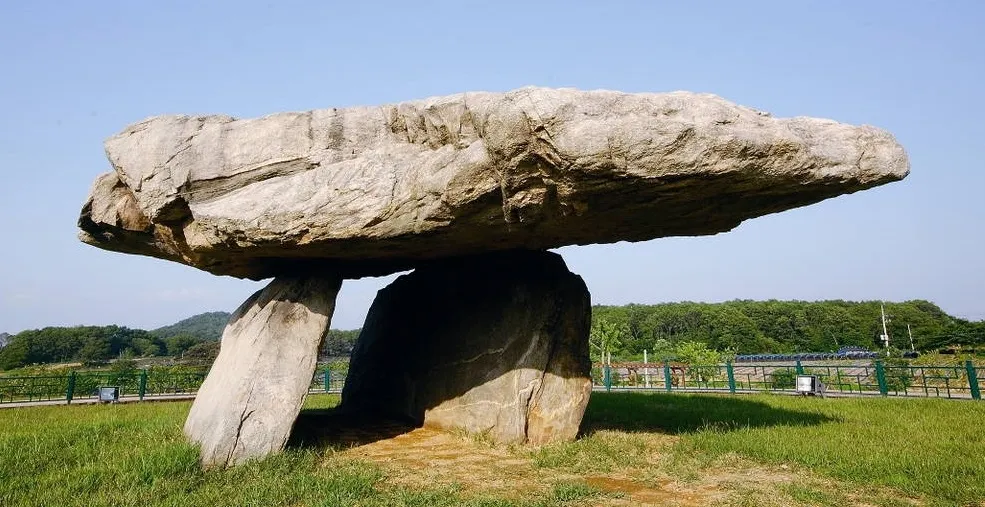
The production and use of bronze did not simply signify the introduction of a new metal tool. Bronze, an alloy of copper and tin, required access to raw materials and specialized knowledge of metalworking. Because it was difficult to secure sufficient resources solely within the peninsula, exchange with surrounding regions was likely necessary. This indicates that Bronze Age culture developed within a broader network of interaction across Northeast Asia. The spread of technology and the expansion of exchange networks both strengthened regional connections and shaped patterns of cultural similarity and difference.
In the later Bronze Age, the mandolin-shaped bronze dagger culture gradually gave way to the slender bronze dagger culture. Slender daggers were longer and narrower, and their manufacturing techniques were more refined. This transformation reflects not only technological advancement but also possible changes in social and political conditions. The evolving forms of weapons may suggest the presence of intergroup tensions and competition. Some archaeological sites from this period also show evidence of strengthened defensive structures within settlements.
slender bronze dagger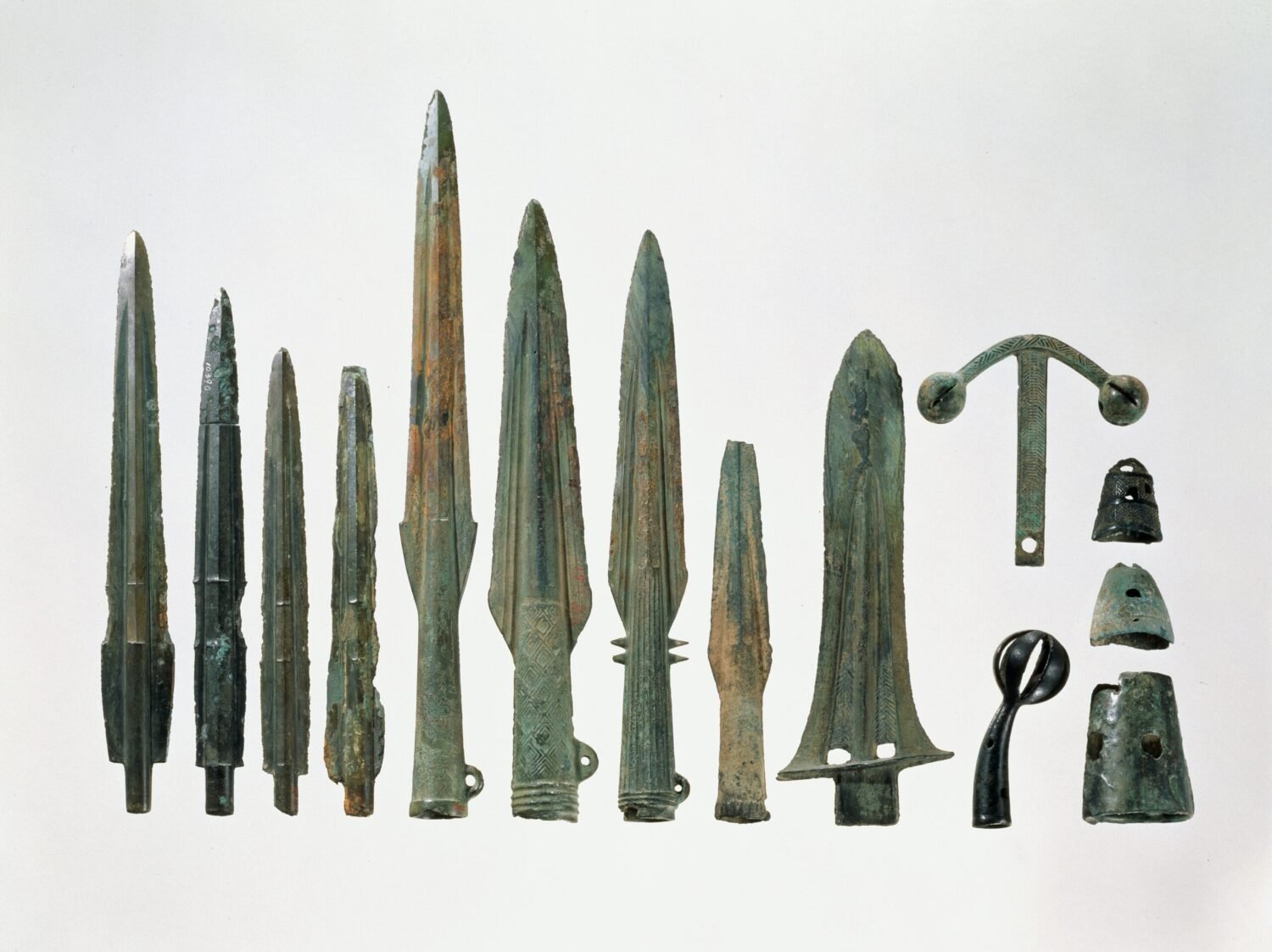
Around 500 BCE, iron gradually began to spread across the peninsula. Early iron artifacts were produced primarily through casting and were mainly used for agricultural tools and certain types of weapons. Iron was stronger than bronze and comparatively less expensive to produce, which allowed it to become increasingly widespread. Over time, forged iron tools became more common, and production techniques further advanced. The spread of iron significantly improved agricultural productivity, leading to population growth and the expansion of settlements.
Nevertheless, bronze and iron coexisted for a considerable period. Bronze continued to be used for ritual or symbolic objects, while iron increasingly dominated practical tools. This transitional phase demonstrates that technological change did not occur abruptly. Social structures also evolved gradually. Increased productivity reshaped relationships among communities and opened the possibility for broader political integration.
Ultimately, the Bronze Age on the Korean Peninsula was not merely the period when a new metal came into use. It was an era marked by the expansion of settled agriculture, the accumulation of surplus, the emergence of social stratification, the widening of exchange networks, and the increasing complexity of social organization. The economic foundations and social structures formed during this time became the groundwork for subsequent historical developments. The Bronze Age stood at the threshold between prehistory and early history, and the transformations that accumulated during this period would shape the next stage of the peninsula’s historical evolution.