
As a lover of words, I’ve always admired RM’s writing. His ability to turn emotion into image comes through most clearly in Verse 3 of “Into the Sun,” which, to me, feels like the most poetic and poignant moment in the entire Arirang album.
Built on an acoustic foundation, “Into the Sun,” moving differently from the rest of the record, leans into a soul pop rock sound, carried by the loose, unhurried flow you often hear in jam bands. The groove feels relaxed, almost weightless, and yet it fills the entire space of the song.
When I first listened to it, I was reminded of “Everything” by The Black Skirts, one of my favorite Korean indie acts. There is a similar warmth there. I also thought of Hyukoh’s “Comes and Goes,” especially in the way the acoustic groove gently opens the track, and even the American band Couch, particularly their song “Jesse,” with its soft, flowing texture.
Placed at the very end of the album, the song feels like dusk. It is the kind of track you would play as the day fades, when the light softens and everything slows down. It is an outro that gathers everything that came before and lets it settle. And in the closing repetition of “I’ll follow you into the sun,” you feel a quiet swell of emotion.
The title itself carries a simple but powerful meaning. “Into the Sun” is often used to express a movement toward light and hope. But to walk into the sun is also to risk being burned. It suggests a willingness to step into something overwhelming, to endure that intensity, not for its own sake, but in the hope of finding one’s way home.
That sense of risk and uncertainty comes into focus as RM’s verse begins with the phrase “개와 늑대의 시간” (the hour of dog and wolf). A phrase that appears often in Korean literature, it’s a translation of the French expression L’heure entre chien et loup. It refers to that brief moment at dusk when everything turns shadowed, when you cannot tell whether the figure approaching you is a familiar dog or a threatening wolf. It captures that uneasy space between day and night, between ally and enemy, between safety and danger.
RM extends this image with his own creative line. He speaks of “부서진 짐승들의 나침반” (the compass of broken beasts). It’s a metaphor that does not come from established literature. It feels closer to something you might find in a web novel, a game narrative, or a personal essay. The image suggests instinct gone astray, direction that no longer functions. It captures the feeling of being lost not just physically, but internally.
He then moves from that broken sense of direction into something more grounded, more human. The verse turns toward the noise and remnants of everything they’ve been through, those moments that were never peaceful, those lingering regrets that refused to fade. In the middle of it all, he places himself simply as someone still breathing, still defiant, still human:
우리들의 피난 소란들과 미련 앞 (Facing the chaos, the commotions, and the regrets)
숨 쉬며 반항하는 인간 (A human being, breathing and defiant)
And then the tone drastically shifts.
“난 집에 가고파, 네가 있는 곳” (I want to go home, to where you are).
It’s a simple line, but it changes everything. After all the confusion and wandering, the desire is no longer about finding a path. It’s about returning to a place defined not by direction, but by presence.
The images that follow are soft and almost still. “풀이 뜨고 별 지는 곳” (A place where grass grows and stars fade). Not something distant or grand, but something close, something lived in. A place that feels real.
RM continues: “불을 건네줘, 이 기름 속” (Pass me the fire, in this oil). The image isn’t so much about danger as it is about keeping something alive. The fire becomes something to carry forward, a steady flame that helps him continue on his way back.
He concludes, “너는 멋지고 달은 아마 뜨지 않을 거야 오늘” (You are radiant; the moon probably won’t rise tonight). It’s simple, almost disarmingly so. But here, it feels like clarity. Like everything has been stripped down to what matters. There’s no guiding light needed in the sky. And yet, it doesn’t feel uncertain. By now, the need for that kind of guidance has already faded. The direction he was searching for is no longer above him. It’s already been found.
Throughout his work, RM often describes himself and the group as beings on the edge, untamed, standing somewhere between belonging and isolation. In this verse, that idea deepens. He speaks, in essence, of throwing away a broken compass and choosing instead to follow a single voice. It is a powerful shift. After a long period of disorientation, of losing direction, he returns by trusting only one thing. ARMY becomes that point of orientation, the one constant that remains when everything else falls apart.
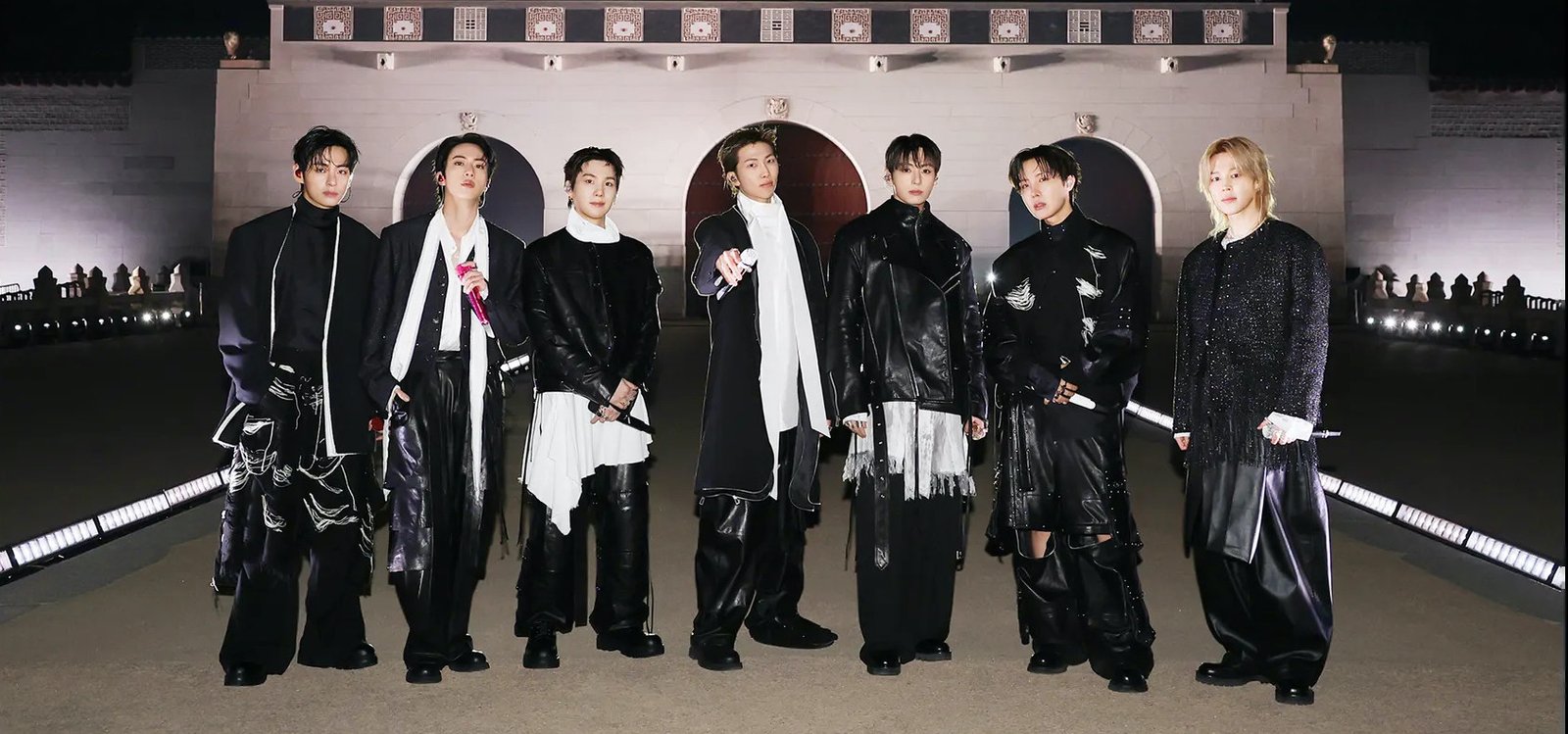
It is a simple thought, but it carries weight, especially now. After military service, after individual paths and separate journeys, the seven members stand together again in 2026. Each line in this short verse feels like part of a long letter by RM, written over time, finally delivered.
In that sense, “Into the Sun” feels like a continuation, even a completion, of earlier songs like “HOME.” Back then, home was something to escape to, a place to run when the world felt too heavy. Here, it is no longer an escape. It is a destination reached after everything has been endured. The anxiety is gone. What remains is a certainty.