


작년 9월, 플로리다주 케이프 커내버럴에서 AST 스페이스모바일 위성 5기를 탑재한 스페이스X의 ‘팰컨 9’ 로켓이 발사됐다. 베네수엘라 이민자 출신의 미국인 사업가 아벨 아벨란(Abel Avellan)이 창업한 AST(Avellan Space Technology) 스페이스모바일은 일반 스마트폰에 직접 고속 브로드밴드를 제공함으로써 일론 머스크의 스타링크와 제프 베이조스의 프로젝트 쿠이퍼를 능가하겠다는 구상을 추진하고 있다.
AST의 각 위성에는 65㎡ 크기의 안테나가 탑재되었으며, 이는 223㎡ 규모의 후속 안테나를 위한 전 단계다. 이 초대형 안테나 덕분에 회사는 단 약 90기의 위성만으로 전 세계 커버리지를 확보할 수 있는데, 2026년 말까지 60기를 궤도에 올리는 것을 목표로 하고 있다. 이 사업의 목표는 기지국이 닿지 않는 곳에서도 휴대전화가 연결 상태를 유지하도록 하는 것이다. 별도의 특별한 위성전화 없이 외딴 산길이나 먼 바다에서도 통화가 가능해진다.
머스크가 소유한 스타링크의 핵심 사업은 여전히 가정·기업·차량·기관을 대상으로 한 고정형 인터넷이고, 베이조스의 쿠이퍼도 유사한 고정형 모델을 지향한다. 스타링크는 규모와 기업가치(약 3,500억 달러), 그리고 워싱턴에서의 영향력에서 시가총액 약 87억 달러와 소수의 위성만을 가진 AST를 압도한다. 그러나 AST는 주로 미국과 유럽 밖의 개발도상국에서 스타링크 하드웨어와 월 이용료를 감당하기 어려운 26억 명을 대상으로, 휴대전화 요금에 몇 달러만 보태는 저렴한 가격을 목표로 한다. 도이치뱅크는 AST의 매출이 2026년에 약 3억 7천만 달러, 2030년에는 50억 달러를 넘어설 것으로 예상한다.
휴대전화는 위성과의 직선 가시선이 필요하고 안테나는 매우 작다. 스타링크와 프로젝트 쿠이퍼, 여러 중국 업체들은 저궤도에 수천 기의 저가 위성을 촘촘히 배치해 위성들끼리 신호를 넘겨주면서 지상국과의 안정적 연결을 유지하려 한다. 하지만 내부에 내장된 휴대전화 안테나는 너무 작아 문자 메시지 이상의 대역폭을 확보하기가 어렵다. 바로 여기에서 AST의 차별점이 드러난다. AST의 위성 안테나는 스타링크보다 50배 이상 크고, 이동 중인 휴대전화의 내부 안테나를 겨냥해 설계됐다.
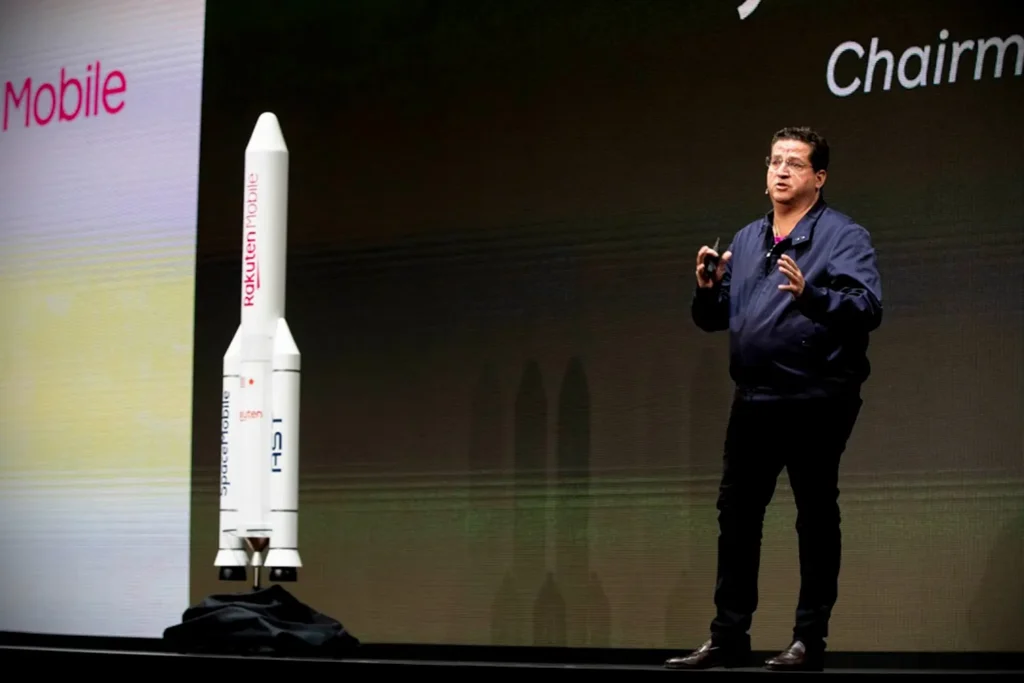
AST는 이미 버라이즌, 보다폰, 라쿠텐, AT&T 망에서 휴대전화로 영상 통화까지 성공했다. 미국의 가장 큰 통신사 AT&T는 AST 위성이 더 올라가면 서비스를 시작할 계획이다. 전문가들은 아주 긍정적인 평가를 내놓고 있다. AST 위성들이 훨씬 넓은 지역을 커버하며, 이동 중인 기기에도 신호를 전달하도록 설계되어 있고, 스타링크가 본래 지상에 고정된 기지국에 인터넷을 제공하도록 설계된 시스템이지, 본질적으로 이동하는 모바일 기기를 위한 시스템은 아니기 때문이라는 것이다.
머스크는 우주 파편과 천문 관측 방해 문제를 이유로 FCC(미국 연방통신위원회)에 AST를 고발한 상태이다. 그럼에도 AST의 주가는 열성적인 개인투자자층의 지지를 받으며 급등했다. 이제 승부는 아벨란의 초대형 위성 안테나와 통신사 중심 파트너 모델이 범지구적 스마트폰 기본형 브로드밴드를 수익 사업으로 먼저 정착시키느냐, 아니면 스타링크와 쿠이퍼가 이 시장을 더 빨리 선점하느냐에 달려 있다.
—————————————
(먼저 집필한 영어 원문)
Space Internet Competition: AST SpaceMobile Takes on Starlink, Aiming for 2.6 Billion Users with Direct-to-Phone Service
Last September, SpaceX’s Falcon 9 rocket carrying five AST SpaceMobile satellites was launched from Cape Canaveral, Florida. Founded by Abel Avellan, a Venezuelan-born American entrepreneur, AST (Avellan Space Technology) SpaceMobile aims to surpass Elon Musk’s Starlink and Jeff Bezos’s Project Kuiper by providing high-speed broadband directly to ordinary smartphones.
Each AST satellite is equipped with an antenna spanning 65 square meters, a precursor to an even larger 223-square-meter model in development. These massive antennas allow the company to achieve global coverage with only about 90 satellites, and it plans to have 60 in orbit by the end of 2026. The project’s goal is to keep mobile phones connected even where no ground base stations exist, enabling calls from remote mountain trails or open seas without the need for a specialized satellite phone.
Musk’s Starlink remains focused on providing fixed-point internet for homes, businesses, vehicles, and institutions, while Bezos’s Kuiper pursues a similar model. Starlink, with its vast scale, valuation of around $350 billion, and strong political influence in Washington, far outweighs AST, whose market capitalization stands at about $8.7 billion with only a small fleet of satellites. However, AST targets a different audience: the 2.6 billion people in developing countries across the Americas, Africa, and Asia who cannot afford Starlink’s hardware and monthly fees. AST hopes to offer service at a fraction of the price; just a few extra dollars on top of regular phone bills. Deutsche Bank projects AST’s revenue to reach approximately $370 million in 2026 and exceed $5 billion by 2030.
A smartphone requires a direct line of sight to the satellite, and the antenna built inside the phone is tiny. Starlink, Kuiper, and several Chinese competitors are attempting to overcome this by deploying thousands of low-cost satellites in low-Earth orbit that hand off signals among themselves to maintain stable ground connections. But the bandwidth accessible through a phone’s small antenna is often insufficient for more than text messaging. Here lies AST’s key distinction: its satellite antennas are more than fifty times larger than Starlink’s and designed specifically to target the antenna of moving mobile phones.
AST has already succeeded in conducting video calls via ordinary mobile phones over Verizon, Vodafone, Rakuten, and AT&T networks. AT&T, the largest U.S. carrier, plans to begin commercial service once additional AST satellites are deployed. Analysts have expressed strong optimism, noting that AST’s satellites cover far wider areas and are designed to maintain signals even with moving devices. By contrast, they predict Starlink will struggle to adapt its system for smartphones because it was fundamentally engineered to serve fixed ground stations, not mobile users.
Musk has filed a complaint with the U.S. Federal Communications Commission (FCC) against AST, citing concerns over space debris and interference with astronomical observations. Nevertheless, AST’s stock price has soared, buoyed by enthusiastic retail investors. The battle now depends on whether Avellan’s super-sized antenna and carrier-centric partnership model can first establish a profitable business for global basic smartphone broadband, or whether Starlink and Kuiper can capture this market faster.