
Lee Jae-myung’s election as president earlier this year left me absolutely giddy, like I was floating on cloud nine. And that feeling hasn’t faded at all. If anything, it’s only grown stronger. President Lee has been everything I’d hoped for and more. The man never stops working. Not even on weekends. He is trying to undo the damage from those three disastrous years under Yoon Suk-yeol, when Korea grew poorer, industry lagged, and social inequality hit new lows.
Almost the moment he was elected, President Lee received an invitation to attend the G7 meeting in Canada. Watching him at the conference was like seeing a seasoned statesman; he mingled with world leaders, laughed and joked, never once looking out of place or overwhelmed. You’d think he’d been Korea’s president for years and everyone already knew him.
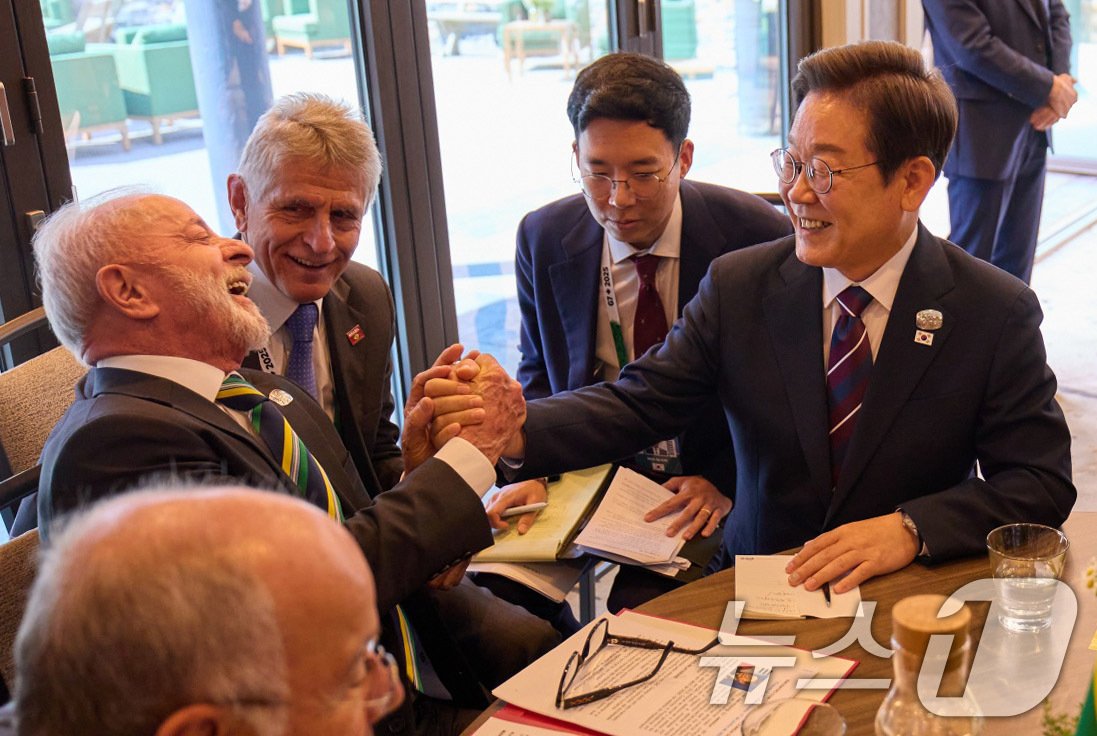
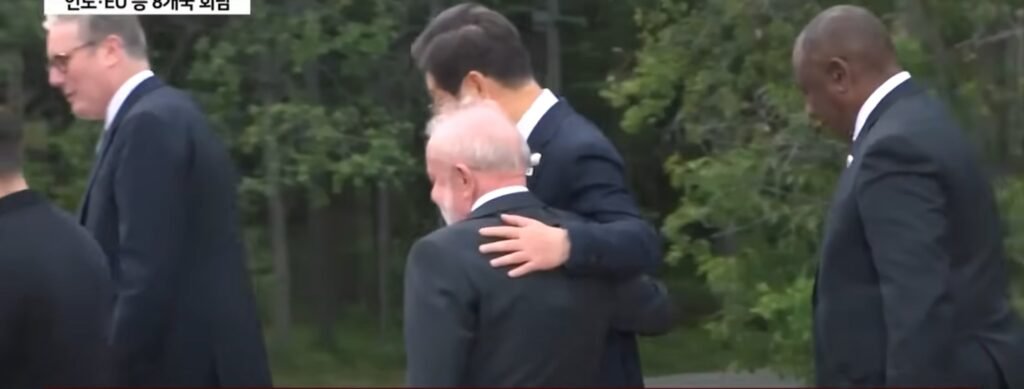
One scene from that summit stuck with me: after the group photo with the Canadian Rockies in the background, President Lee walked over to shake hands with President Lula da Silva of Brazil. As they left the dais, the two put their arms around each other, walking together like old friends. People didn’t really understand the meaning behind that moment, since Korea and Brazil aren’t close neighbors or huge trading partners. But to me, it felt symbolic, almost like a quiet recognition of shared struggle.
Because here’s the thing: Lee Jae-myung and Brazil’s Luiz Inácio Lula da Silva have lived parallel lives, in many ways. Both were born into hard poverty, their childhoods spent not in classrooms but in factories, where they endured injuries that left lifelong scars. Lee Jae-myung grew up in South Korea, forced into factory work as a kid, his education interrupted, his arm forever changed by a workplace accident. Lula, in Brazil, was much the same, working in harsh conditions from a young age, his own injury a reminder of everything he’d had to overcome.
Their paths to leadership were anything but easy. Both faced entrenched political and judicial elites determined to shut them out, not just with political obstacles but with outright persecution. Lula was famously imprisoned on charges that were later overturned because of blatant judicial bias and corruption. Lee Jae-myung survived many trumped-up charges and even a brutal assassination attempt, each challenge clearly aimed at silencing him.
Yet, both refused to be broken. Lula fought his way back and returned as Brazil’s president. Lee Jae-myung pushed on through everything, finally reaching Korea’s highest office after years of relentless persecution.
Now, with both men in power, there’s a sense of hope for everyday people, and those so often left behind. President Lee, in just a few months, has managed to do more than his predecessor did in years, launching wave after wave of reforms. President Lula da Silva, for his part, is still fighting for progressive policies and social justice, representing the hopes of millions in Brazil, even while steering through tough political waters.
When I look at Lee Jae-myung and Lula, I see the same fire: a commitment to justice, a refusal to leave the marginalized behind, and a belief that even from the hardest beginnings, something extraordinary can grow. Their stories remind me that real leadership comes from those who’ve tasted adversity, who never stop believing in a fairer, kinder world. Against all odds, they rose. And in doing so, they give the rest of us a reason to believe in the power of the human spirit to change everything.
