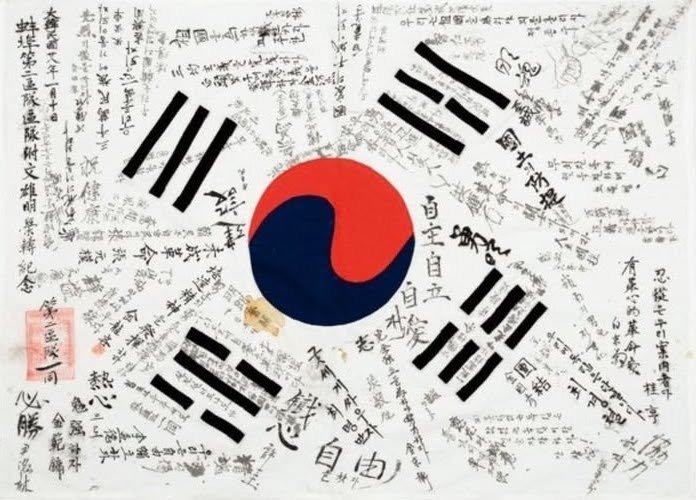

In January 2026, the former and current leaders of the International Political Science Association (founded under the auspices of UNESCO in 1949, IPSA is the leading international body for political science, representing a global community of over 50,000 scholars through its network of national and regional associations) formally nominated the citizens of the Republic of Korea for the 2026 Nobel Peace Prize.
The scholars’ core justification rests on what they call the “Revolution of Light,” referring to the peaceful mass mobilization that followed the unlawful martial law decree by then-president Yoon Suk-yeol on December 3, 2024.
Through the self-coup attempt, the ultra-conservative Yoon sought to drag Korea back to the 1980s, when the country was ruled by military dictatorship. His actions were driven in large part by a desire to shield himself and his wife from mounting allegations of corruption and bribery that were steadily coming to light and could have led to investigation and arrest after his term ended. He dispatched armed forces to the National Assembly (Korea’s version of Congress), with orders to detain lawmakers from the liberal Democratic Party.
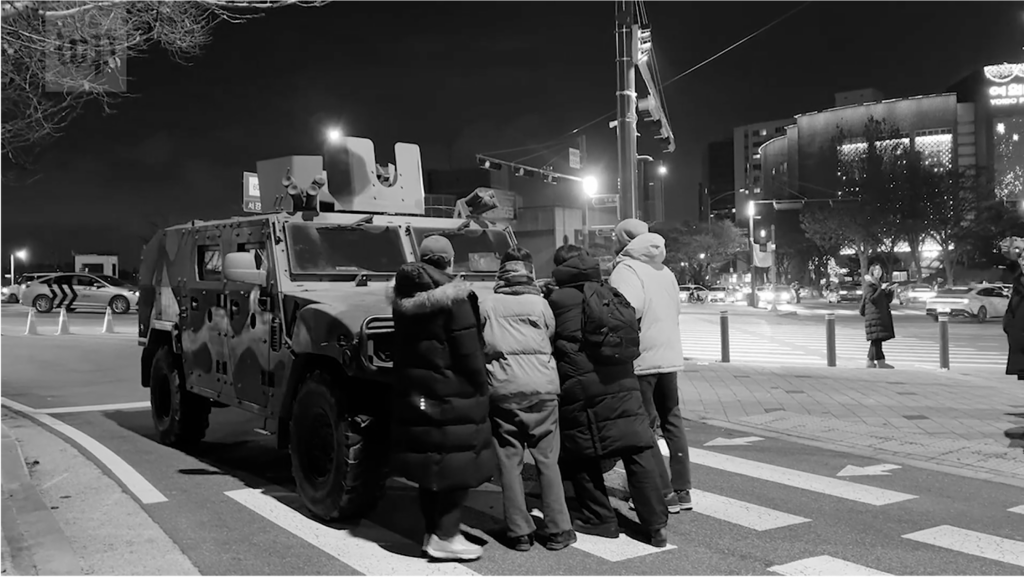
As he declared unlawful martial law on national television and troops moved toward the Assembly, ordinary citizens rushed to the scene. They stood in front of armored vehicles. They physically blocked soldiers from advancing. They helped lawmakers enter the building so that a vote could be held to nullify the illegal martial law declaration.
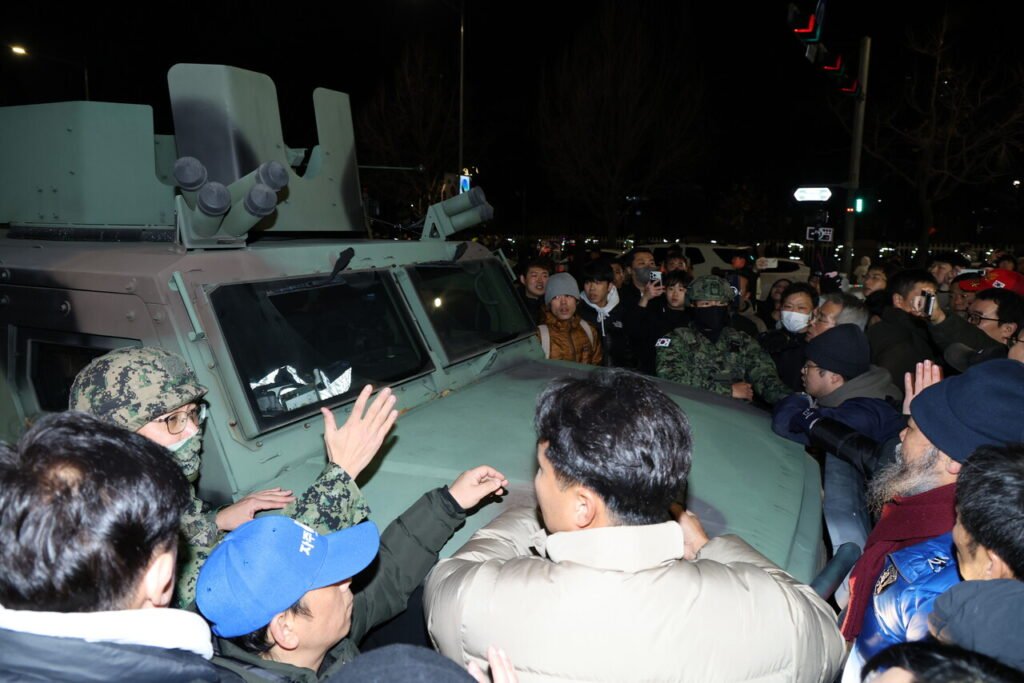
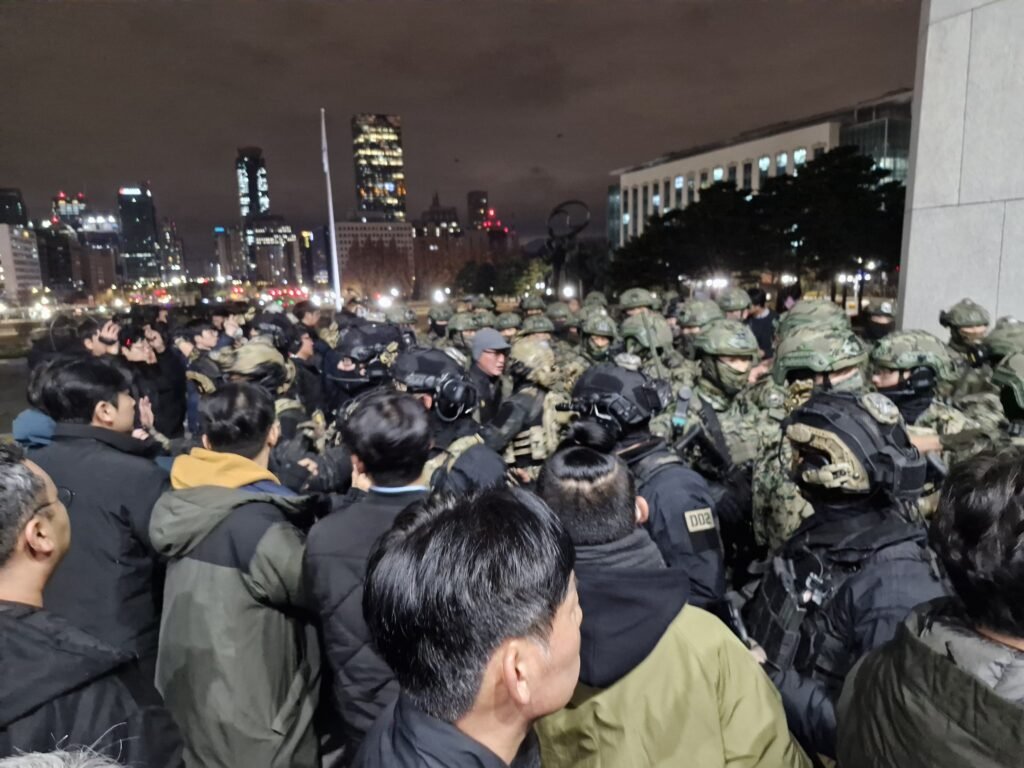
Without the courage of these citizens, the situation could easily have spiraled into chaos and bloodshed. Subsequent reports revealed terrifying plans to arrest opposition politicians and journalists and detain them in undisclosed locations, where they could have faced severe mistreatment or worse. It was the swift, collective action of ordinary people that prevented a grave rupture in Korea’s democratic order.
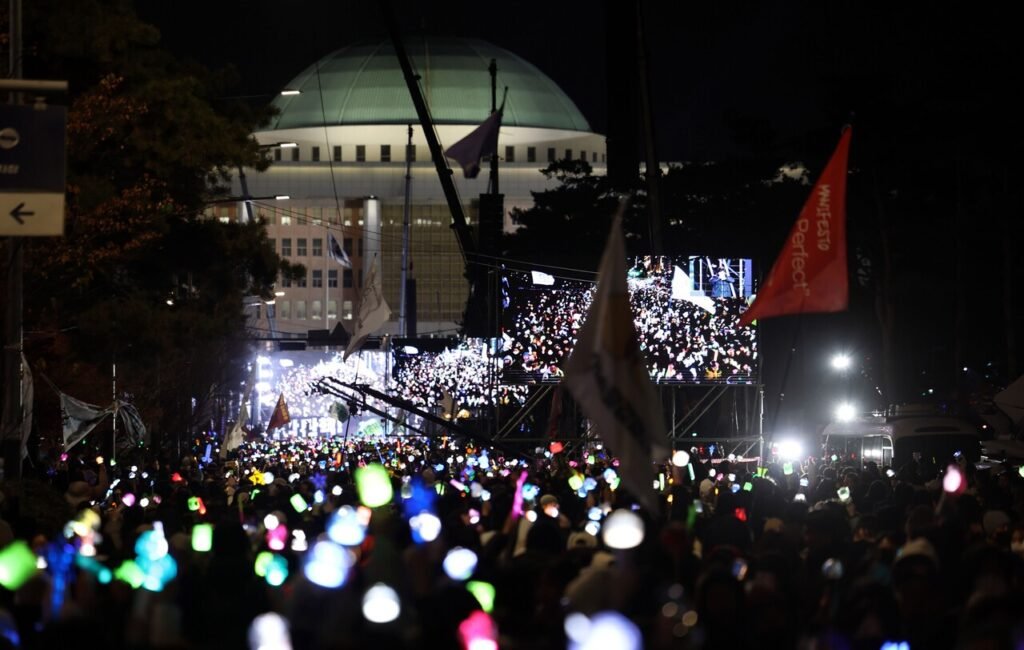
Even after the National Assembly voted to nullify the unlawful declaration of martial law, citizens continued to gather in the streets every day for the next five months. They stood there to protect democracy, to restore constitutional order, and to demand the impeachment of the president. There was no chaos. There was no violence. Each gathering remained orderly, disciplined, and explicitly nonviolent.
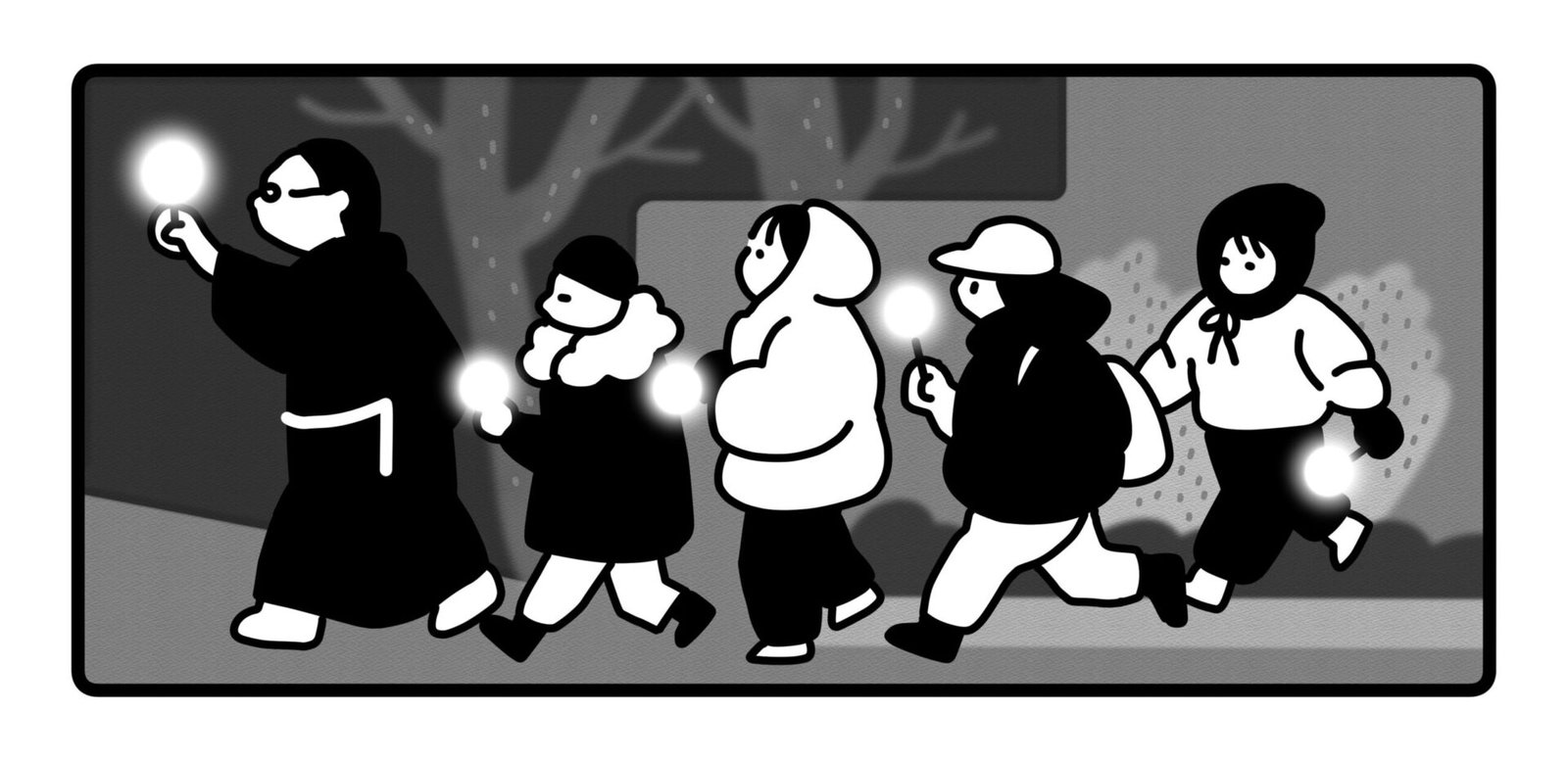
With light sticks in their hands, they sang songs and raised their voices for democracy. When the rallies ended, they cleaned the streets carefully before going home. Not a single block was left in disarray.
Though the movement had no single leader, it displayed remarkable coordination. Participants shared clear goals, practiced internal discipline, and made collective decisions. It was not driven by one figure at the top, but by a shared commitment to democratic principles.
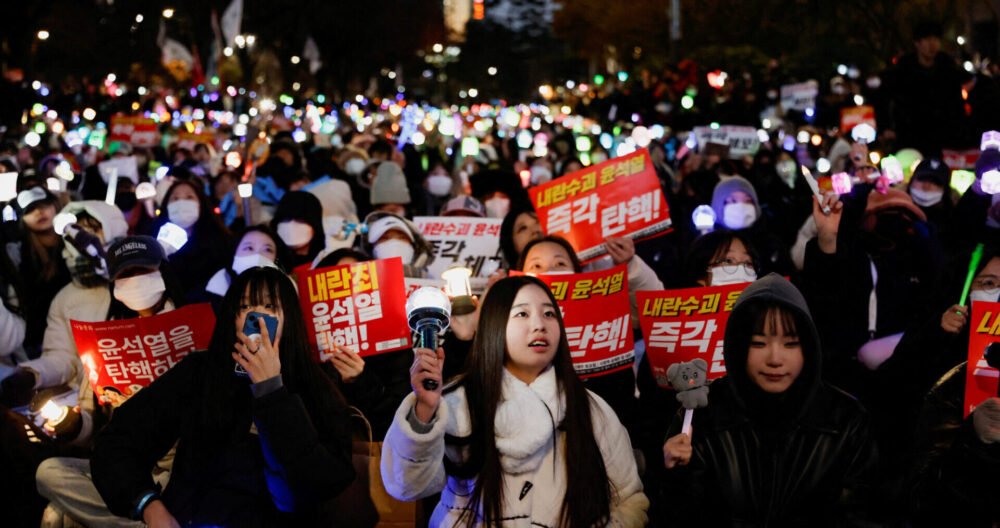
The Nobel Peace Prize is typically awarded to individuals or clearly defined organizations, not to entire nations. But the IPSA scholars carefully framed their case so that “the citizens of the Republic of Korea” could be understood not as a state, but as a functional civic collective, that the Korean citizens acted collectively in a way that functioned like a pro democracy organization.
IPSA also emphasized the international significance. The Nobel Peace Prize is not meant to reward purely domestic achievements. It must recognize contributions that advance peace, democracy, or human rights beyond national borders.
IPSA’s nomination argues that at a time of global democratic backsliding, the Korean case provides a powerful model. It demonstrates how constitutional order can be defended without bloodshed. It could serve as a case study in democratic resilience, offering lessons to other societies facing authoritarian threats.
Awarding the prize directly to “the citizens of the Republic of Korea” would be unprecedented in scale. We believe there is symbolic power in recognizing an entire people acting peacefully to defend democratic order.
Whether the Nobel Committee ultimately grants the prize to a defined organization or embraces the broader concept of a citizen collective, the nomination itself highlights a profound claim: that ordinary people, holding light sticks in the streets and acting together without violence, can save democracy and offer hope to the world.
