

Space Internet Competition: AST SpaceMobile Takes on Starlink, Aiming for 2.6 Billion Users with Direct-to-Phone Service
Last September, SpaceX’s Falcon 9 rocket carrying five AST SpaceMobile satellites was launched from Cape Canaveral, Florida. Founded by Abel Avellan, a Venezuelan-born American entrepreneur, AST (Avellan Space Technology) SpaceMobile aims to surpass Elon Musk’s Starlink and Jeff Bezos’s Project Kuiper by providing high-speed broadband directly to ordinary smartphones.
Each AST satellite is equipped with an antenna spanning 65 square meters, a precursor to an even larger 223-square-meter model in development. These massive antennas allow the company to achieve global coverage with only about 90 satellites, and it plans to have 60 in orbit by the end of 2026. The project’s goal is to keep mobile phones connected even where no ground base stations exist, enabling calls from remote mountain trails or open seas without the need for a specialized satellite phone.
Last September, SpaceX’s Falcon 9 rocket carrying five AST SpaceMobile satellites was launched from Cape Canaveral, Florida. Founded by Abel Avellan, a Venezuelan-born American entrepreneur, AST (Avellan Space Technology) SpaceMobile aims to surpass Elon Musk’s Starlink and Jeff Bezos’s Project Kuiper by providing high-speed broadband directly to ordinary smartphones.
Musk’s Starlink remains focused on providing fixed-point internet for homes, businesses, vehicles, and institutions, while Bezos’s Kuiper pursues a similar model. Starlink, with its vast scale, valuation of around $350 billion, and strong political influence in Washington, far outweighs AST, whose market capitalization stands at about $8.7 billion with only a small fleet of satellites. However, AST targets a different audience: the 2.6 billion people in developing countries across the Americas, Africa, and Asia who cannot afford Starlink’s hardware and monthly fees. AST hopes to offer service at a fraction of the price; just a few extra dollars on top of regular phone bills. Deutsche Bank projects AST’s revenue to reach approximately $370 million in 2026 and exceed $5 billion by 2030.
A smartphone requires a direct line of sight to the satellite, and the antenna built inside the phone is tiny. Starlink, Kuiper, and several Chinese competitors are attempting to overcome this by deploying thousands of low-cost satellites in low-Earth orbit that hand off signals among themselves to maintain stable ground connections. But the bandwidth accessible through a phone’s small antenna is often insufficient for more than text messaging. Here lies AST’s key distinction: its satellite antennas are more than fifty times larger than Starlink’s and designed specifically to target the antenna of moving mobile phones.
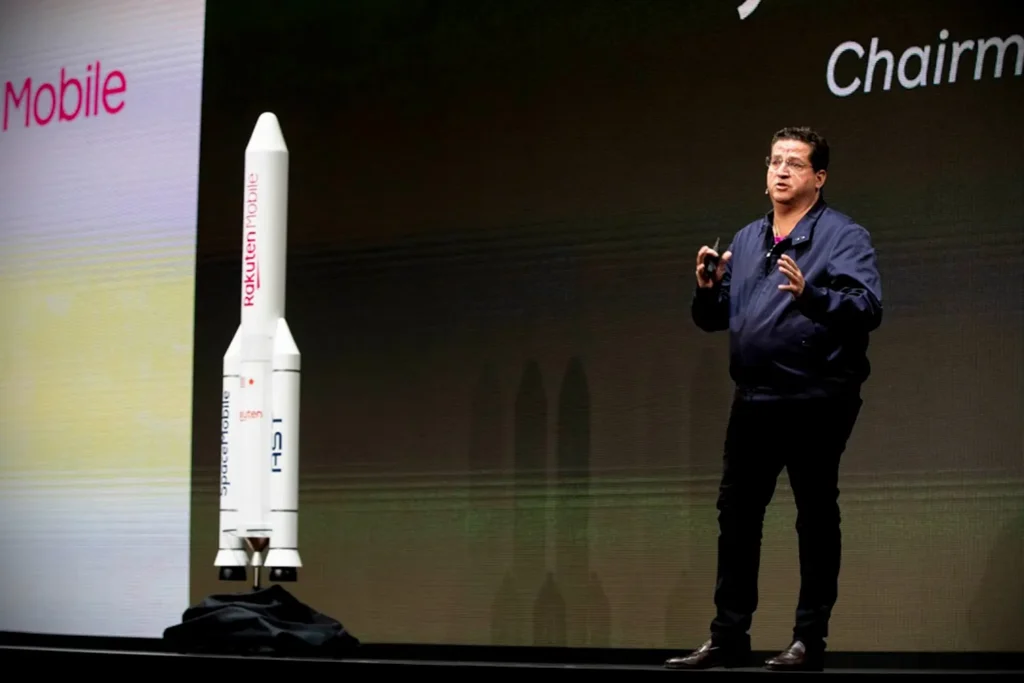
AST has already succeeded in conducting video calls via ordinary mobile phones over Verizon, Vodafone, Rakuten, and AT&T networks. AT&T, the largest U.S. carrier, plans to begin commercial service once additional AST satellites are deployed. Analysts have expressed strong optimism, noting that AST’s satellites cover far wider areas and are designed to maintain signals even with moving devices. By contrast, they predict Starlink will struggle to adapt its system for smartphones because it was fundamentally engineered to serve fixed ground stations, not mobile users.
Musk has filed a complaint with the U.S. Federal Communications Commission (FCC) against AST, citing concerns over space debris and interference with astronomical observations. Nevertheless, AST’s stock price has soared, buoyed by enthusiastic retail investors. The battle now depends on whether Avellan’s super-sized antenna and carrier-centric partnership model can first establish a profitable business for global basic smartphone broadband, or whether Starlink and Kuiper can capture this market faster.